General Description
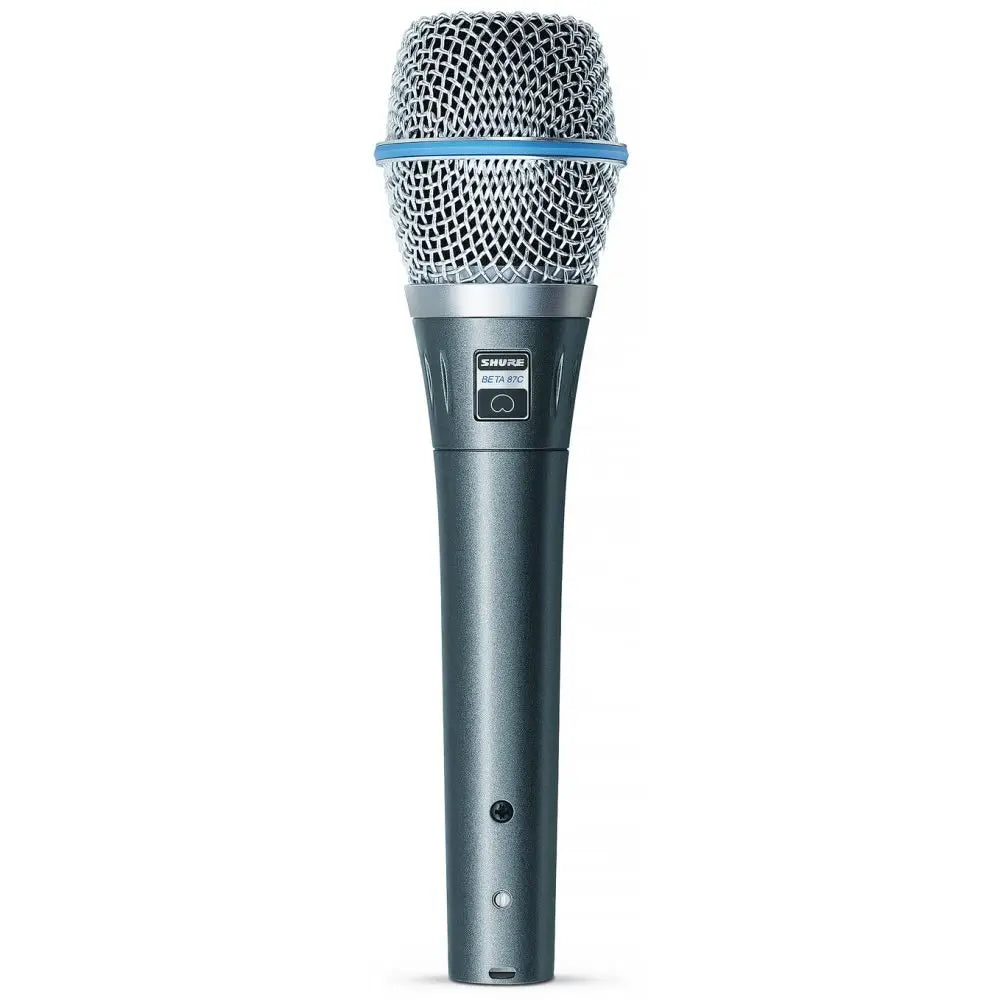
The Shure Beta 87C vocal microphone is precision-engineered to deliver an extremely smooth, extended high-end frequency response in a cardioid condenser design. The warm, natural sound creates an ideal environment for personal monitoring with excellent rear rejection.
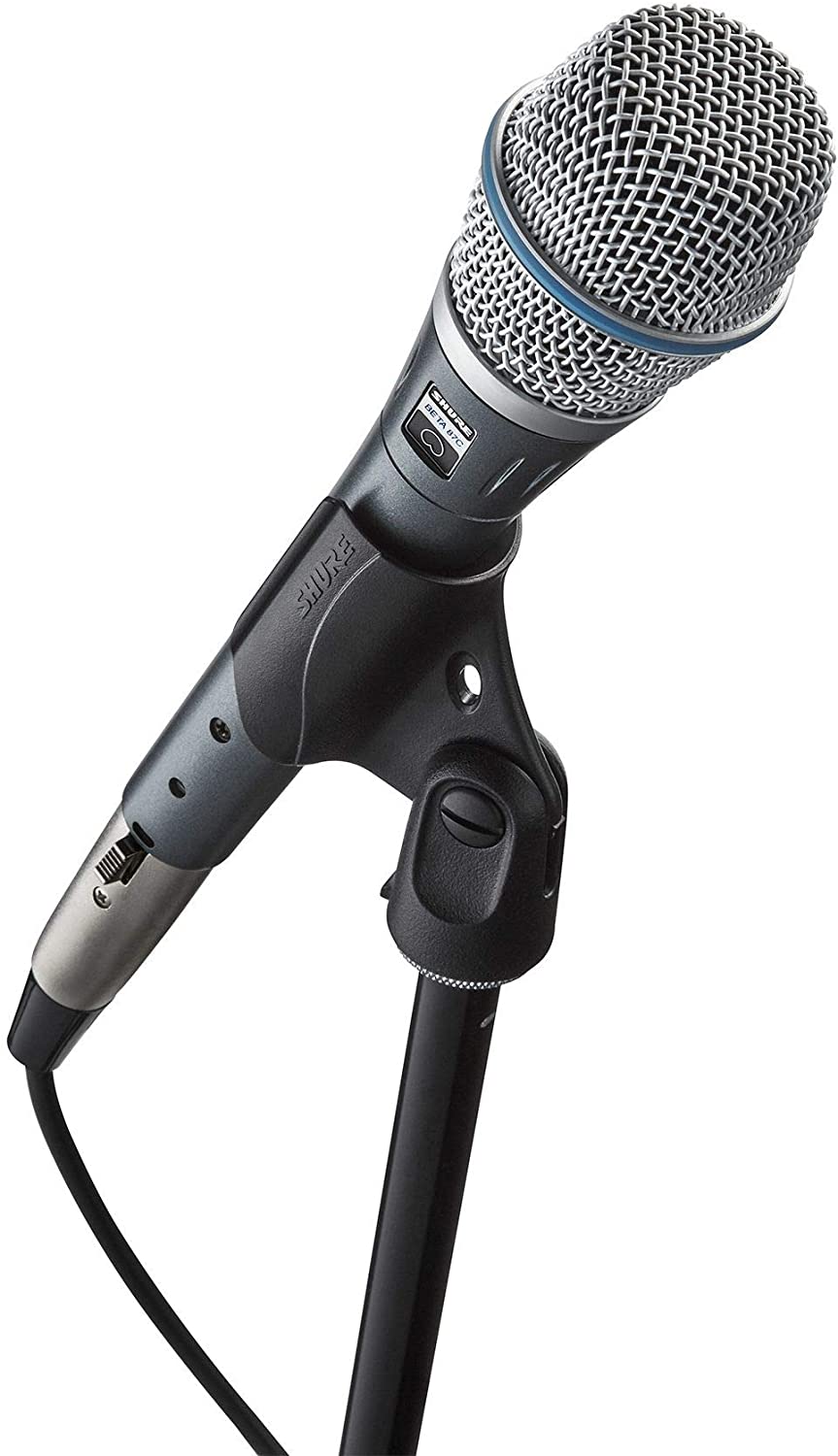
An advanced, cartridge shock mount system, hardened steel-mesh grille, and superior build quality withstand the rigors of daily touring and sound reinforcement.
Features
- Premier live performance microphone with Shure quality, ruggedness, and reliability
- Uniform cardioid pick-up pattern for maximum gain before feedback and excellent rejection of off-axis sound
- Smooth, wide frequency response with slight presence rise and controlled proximity effect tailored for vocals
- Advanced cartridge shock mount system absorbs mechanical shock and minimizes handling noise
- Very low susceptibility to RF and electromagnetic hum
- Dent-resistant steel mesh grille and enamel coated metal alloy construction resist wear and abuse
- Effective built-in pop filter reduces undesirable wind and breath noise
Avoiding Pickup of Unwanted Sound Sources
Place the microphone so that unwanted sound sources, such as monitors and loudspeakers, are directly behind it. To minimize feedback and ensure optimum rejection of unwanted sound, always test microphone placement before a performance.
Proximity Effect
Unidirectional (cardioid) microphones progressively boost bass frequencies by 6 to 10 dB below 100 Hz when the microphone is at a distance of about 6 mm (1/4 in.) from the sound source. This phenomenon, known as proximity effect, can be used to create a warmer, more powerful sound. To prevent explosive low frequency sound during close-up use, the bass response gradually rolls off. This provides greater control and helps the user take advantage of proximity effect.
Power Requirements
This microphone requires phantom power and performs best with a 48 Vdc supply (IEC-61938). However, it will operate with slightly decreased headroom and sensitivity with supplies as low as 11 Vdc.
Most modern mixers provide phantom power. You must use a balanced microphone cable: XLR-to-XLR or XLR-to-TRS.
Specifications
Type
Electret Condenser
Frequency Response
50 to 16,000 Hz
Polar Pattern
Cardioid
Output Impedance
EIA rated at150 Ω(100 Ωactual)
Sensitivity
at 1kHz,open circuit voltage
-51 dBV/Pa(2 mV)[1]
Maximum SPL
1 kHz at 1% THD,1 kΩ load
139 dB
Signal-to-Noise Ratio
70.5 dB[2]
Dynamic Range
at 1kHz,1 kΩ load
117 dB
Clipping Level
1 kHz at 0.25% THD,1 kΩ load
-6 dBV(0.5 V)
Self Noise
typical,equivalent SPL,A-weighted
22 dB
Hum Pickup
typical, at 60 Hz, equivalent SPL/mOe
-5 dB
Polarity
Positive pressure on diaphragm produces positive voltage on pin 2 with respect to pin 3
Weight
| Packaged |
0.565 kg(1.24 lbs) |
| Net |
0.207 kg(0.475 lbs) |
Connector
Three-pin professional audio (XLR), male, balanced
Housing
Aluminum construction with painted blue metallic finish, and hardened steel grille with nickel satin chrome plating
Power Requirements
11 to 52 V DCphantom power(1.2 mA)
[1] 1 Pa=94 dB SPL
[2] S/N ratio is difference between 94 dB SPL and equivalent SPL of self noise, A-weighted